Project Description
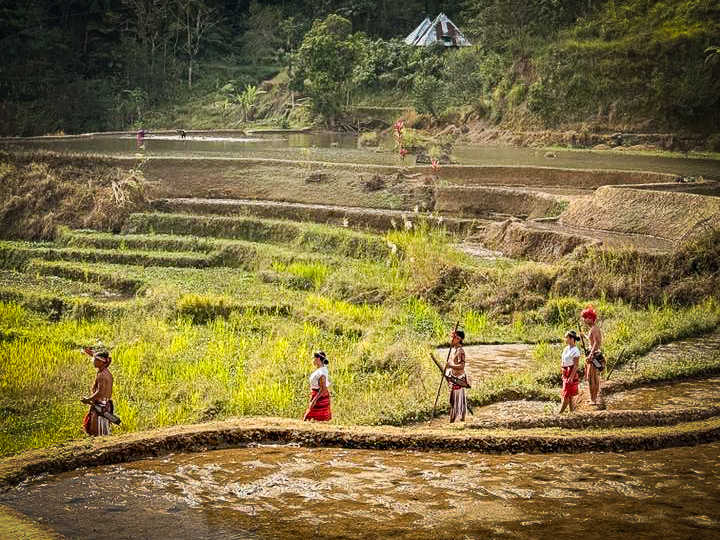
This project documents, archives, and reconnects the sonic heritage of Ifugao agricultural rituals, focusing on the hongan di page (rice rituals). These oral traditions such as chants, invocations, songs, and instrumental soundscapes are fading due to modernization and generational shifts. Led by a newly-initiated mumbaki, the project comprises three components: field recording of live rituals in context; collaborative annotation with culture bearers; and community access to recorded materials. Mumbaki, community leaders, and youth will participate, ensuring intergenerational transmission. The output is a community-owned online collection of pre-harvest, harvest, and post-harvest ritual soundscapes. Responding to the reality that external archives hold Ifugao heritage inaccessible to the source community, this project prioritizes community ownership and positions culture bearers as co-creators of knowledge. Beneficiaries include the Ifugao community, younger practitioners, scholars, and educators. By preserving endangered Indigenous knowledge systems and practices, the project fosters cultural continuity, education, and sustainability in the digital age.
Bio of Awardee/Organization
Mr. Elvin Lupais Hangdaan is a twenty-four-year-old cultural worker and one of the youngest minted Ifugao mumbaki, an indigenous ritual practitioner of the Ifugao Indigenous religious system (baki) who has undergone the required initiation ritual. Immersed in the Tuwali ethnolinguistic group indigenous way of life from an early age in Bayninan, Banaue, he is a woodwork and heirloom beads artisan, curator of the family-owned antique museum, nature adventure guide, and sought-after educator on Ifugao regalia, gong-playing, dances, chants and rituals who is committed to safeguarding the Ifugao heritage and Indigenous practices for future generations.
His most recent engagement is serving as one of the resource speakers during the three-week UP Diliman Culture Bearers-in-Residence Program, Rhythms of the Rice Terraces: Hudhud Chants and Traditional Dances of Ifugao. In this program, he taught in select classes of the Department of Speech Communication and Theatre Arts and conducted university-wide workshops on Hudhud chants—UNESCO-recognized Masterpieces of the Oral and Intangible Heritage of Humanity. Alongside the chants, Elvin also shared his knowledge of traditional Ifugao dances, offering deeper insight into the community’s cultural and spiritual life.
He currently serves as the secretary of the Indigenous People’s Organization in Kinakin, Ifugao and is a member of the Mumbaki Organization and Ifugao Center for Living Culture. As part of his lifelong advocacy of sustaining his Indigenous heritage, he co-founded the Kadangyan Cultural Heritage Group with fellow young Ifugaos, and is currently the organization’s adviser, contributing his expertise to the preservation and promotion of not only Ifugao culture, but also including that of the greater Cordillera Administrative Region. As seen in one of the URL links to his previous works, where he is called to, he endeavours to teach the sounds and rhythms that he grew up with to the young Ifugaos who are equally committed to embodying their own heritage, fostering a network of fellow advocates for culture, especially those who grew up away from their Indigenous roots but want reconnect to this part of their identity.
Jury Report
During a visit to the UP Center for Ethnomusicology, Elvin Hangdaan encountered audio recordings of songs and chants from Ifugao—material still known to people in his community today. Much of it was missing from the collection, and what had been gathered was held by an institution that the source community could not easily access. Hangdaan identifies how external entities hold Ifugao cultural heritage while the community it belongs to does not. This observation and its consequences are the ground on which the project stands. Hongan di Page is an act of repatriation as much as it is an act of documentation.
Hangdaan is twenty-four years old and one of the youngest minted mumbaki, an Indigenous ritual practitioner of the Ifugao baki system. He is also a woodwork and heirloom beads artisan, a curator of his family’s antique museum, a resource speaker on Hudhud chants—a UNESCO-recognized Masterpiece of the Oral and Intangible Heritage of Humanity—and a co-founder of the Kadangyan Cultural Heritage Group, established with fellow young Ifugaos. Among all the proposals received, this was the one where the applicant’s position within the community needed no elaboration. The committee understood that as both an ethical and a methodological foundation.
The project documents the sonic heritage of the Ifugao agricultural rituals—the hongan di page—gathering the chants, invocations, songs, and instrumental soundscapes of the pre-harvest (Ahitulo), harvest, and post-harvest (Apuy) cycles. The recording does not follow the timeline of the grant; it follows the timeline of the rice. The committee recognized in this an ethical as much as a methodological choice—one that allows the tradition to set the pace of its own documentation. The proposal includes the sacrificial animals required by the ritual itself—a pig and six chickens—a detail that speaks to how integrated the archiving is with the living practice it records. Higher-ranking mumbaki will be invited to perform the rituals; community leaders, youth, and culture bearers will participate alongside them. The output is a community-owned online collection—not an endpoint, but a return: the recordings circulated back to the community for continued cultural use, with culture bearers positioned as co-creators of knowledge rather than objects of study.
The number of individuals who still know the verses and the rhythms—the chanters, the mumbaki—is diminishing.
The committee understood the window for this documentation as not indefinite, and it understood Hangdaan’s position within it: a newly initiated mumbaki, at the beginning of his practice, with access to a living tradition that external archives have recorded in fragments and that the community itself does not hold in full. In choosing Hongan di Page, the committee chose to support work that is initiated from within, returns to the community, and is taking place at this moment when it still can.
Pictures
Photos will be shared shortly.