Project Description
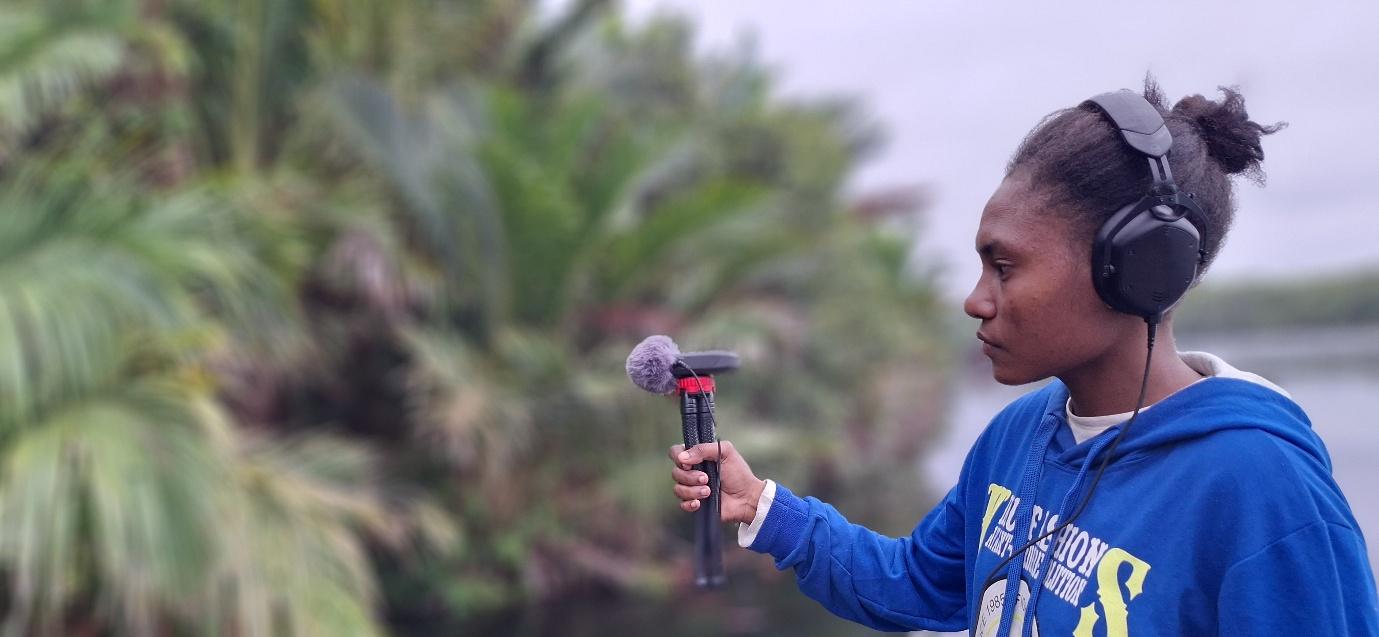
In Yokiwa Village, Sentani (Papua), the clans Awoitauw, Fiobetauw, and Mimitauw sustain akhoykoy, a folklore tradition carrying ecological ethics, cosmological understandings, and teachings on land stewardship. Alyakha Art Center Foundation and Nafas Danau Sentani Arts Collective have worked with clan leaders and local youth to record Yokiwa’s soundscapes and oral narratives. These materials remain unorganized amid ecological pressure and the risk of losing oral knowledge.
The project’s philosophy is that sound is relational knowledge: not extractable content, but a living medium through which people, place, and ancestry remain answerable to one another. Its ethics are governance-centered. Recordings remain owned by the Yokiwa community; curation and naming follow community-based metadata (clan name, recording site, cultural meaning); and no publication or external sharing occurs without clan elder approval. Cultural continuity is the guiding principle.
Over six months, the team will organize and digitize recordings gathered since 2017, conduct soundwalking sessions across lakeside paths, forests, sacred sites, and activity areas, and document akhoykoy through narrative interviews and recordings of its performative contexts. Youth workshops will transfer field-recording skills and enable collaborative selection, description, and validation. Outputs include a locally managed Yokiwa Community Sound Archive (minimum 50 curated recordings), a community soundwalking guide (PDF), a curated audio piece for local education, and a community listening and validation session.
Aligned with the Tawid Grant’s aim to support sound archive initiatives and reconnect sonic heritage with source communities through decolonial, community-centered practice, the project builds local capacity for ethical archiving in Lake Sentani’s changing environment.
Bio of Awardee/Organization
Founded in Papua in 2019 by artists and cultural practitioners Markus Rumbino and Irma Dian Awoitauw, Alyakha Art Center grows as a living constellation of community memory, environmental imagination, and indigenous knowledge. Rooted along the shoreline of Lake Sentani, the Center navigates between ecology, oral tradition, and contemporary experimentations, cultivating creative pathways where local cosmology and artistic innovation intertwine. Its foundation rests on listening: to the land, the shifting waters, the winds across the lake, and the ancestral voices carried within Sentani’s cultural landscape. In 2019, Alyakha Art Center launched its first Artist Residency and The Khayouw Art Festival, while also collaborating in the national Seniman Mengajar program, placing artists within schools and community spaces to foster creative literacy and place-based learning.
In 2021, the Romiyae Phuklah Residency and Art Festival deepened the Center’s engagement with the environmental tensions and philosophical teachings of the Sentani people, inviting artists to respond through sound, movement, and visual storytelling. By 2024, the Center expanded its interdisciplinary explorations through Residensi Baku Konek, transforming natural materials into visual artworks and audio-visual installations. In the same year, collaboration with Dicky Takndare and Patrick Gunawan Hartono produced Helaehili No, an evocative audio-visual work showcased at the Media Arts Community Festival in Makassar.
Alyakha Art Center has become a vital pulse in Papua’s artistic ecosystem, an evolving space where environmental sensitivity, indigenous philosophy, and creative experimentation converge. Through sound research, artist residencies, festivals, and community-driven environmental projects, the Center continues to honor the cosmology of the Sentani people while responding to the living realities of Lake Sentani’s changing landscape.
Jury Report
The selection committee selected the Alyakha Project because it carries the unmistakable texture of sustained work. Rather than promising novelty for its own sake, the proposal offers something rarer: a method refined through practice, and a calm confidence that comes from having already done the patient labor of listening with and within a community. The committee found the project coherent and grounded, and trusted its clarity precisely because it does not overstate what it intends to do.
At the heart of the proposal is a community-led soundwalking and archiving process that treats place as more than scenery. Sound here is presented as a living register of cultural identity and ecological relation, and the planned archive is not designed for external consumption but for cultural continuity. The committee particularly valued the proposal’s explicit ethical commitments: the stated protocol that nothing is published without clan elder approval, and the insistence that knowledge-holders remain the governing force of what is shared, how it is named, and what must remain held within the community.
The committee also recognized the proposal’s specificity in what it seeks to gather and shape. It outlines a set of tangible outcomes that are both achievable and meaningful: a curated body of recordings, soundscape documentation attentive to water, forest, and insect life, and contextual engagement with Akhoykoy folklore. The project’s envisioned materials, including a soundwalking guide and a short curated soundmap or compilation, were read as tools for transmission, ways to make listening teachable and repeatable for younger generations, and to keep cultural education rooted in local authority.
In deliberation, the committee returned to the project’s sense of place and its careful attention to how community work actually happens. The proposal locates itself in the social and environmental geography of Lake Sentani, acknowledging multiple vantage points and lived realities within that landscape. Even the modest practical details, such as supporting community gatherings in ways that make participation possible, were understood as signs of seriousness and care. For the committee, the Alyakha Project demonstrates how an archive can be built without being hardened into an institution: held instead as a shared practice, accountable to those who live with these sounds, and responsive to ecological change that threatens to alter what can be heard, remembered, and passed on.
Pictures
Photos will be shared shortly.